Why do some of our best efforts to fix big problems—like urban food deserts or climate change—barely move the needle? Usually, it’s because we are pulling on ‘low-leverage’ strings.
To truly solve a systemic problem, we have to look past the surface-level constants and find the ‘leverage points’ that govern the system’s goals and paradigms. By understanding where to apply pressure, we can move from merely managing a problem to fundamentally transcending it.
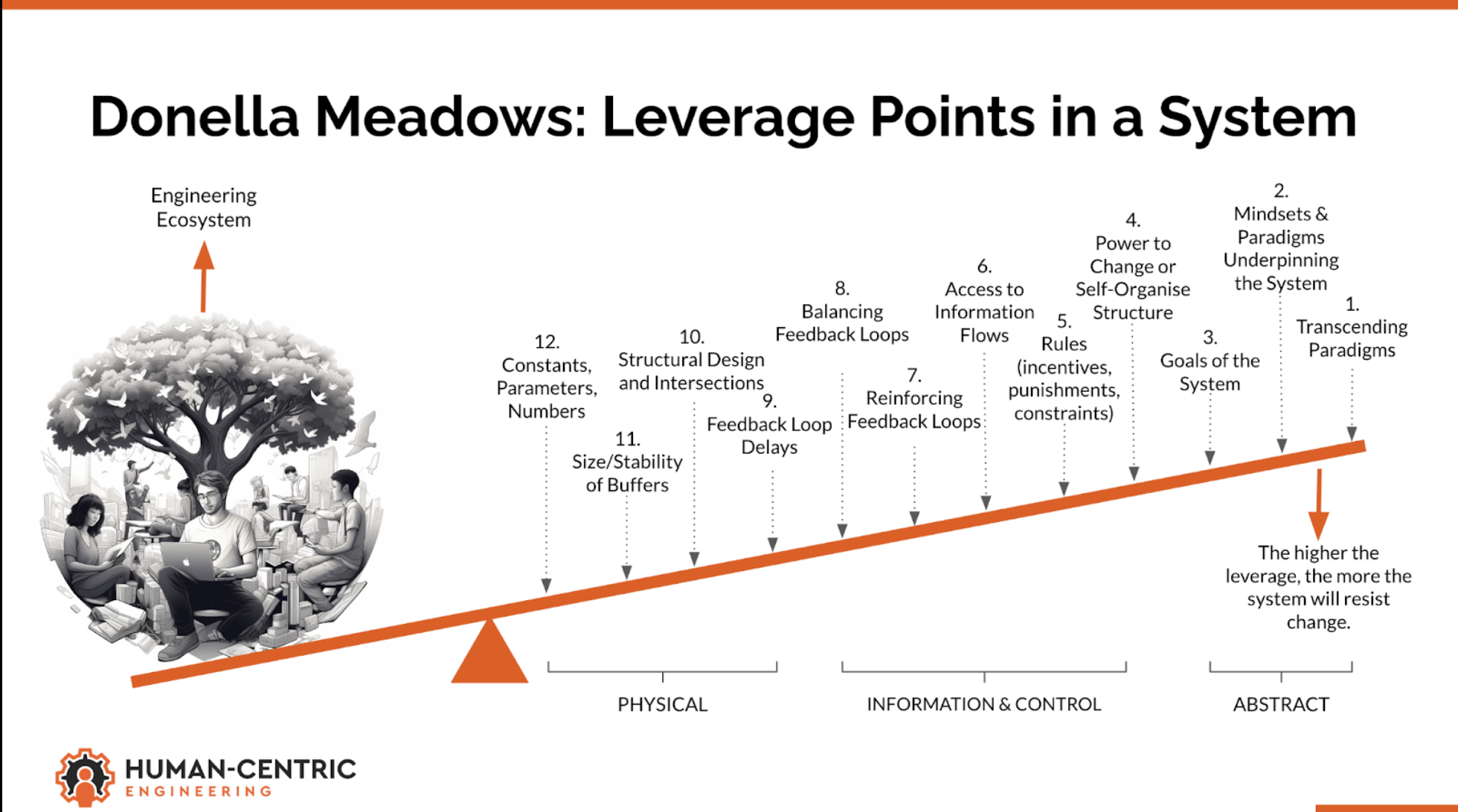
To find those pressure points, I’ve been incorporating into my thought process Donella Meadows’ 12-point scale—a tool that weighs solutions based on how deeply they penetrate a system’s fundamental processes. This framework organizes interventions from the weakest “parameters” to the most powerful “paradigm shifts,” helping us identify where a small amount of pressure creates a disproportionately large shift in outcome.
The Twelve Leverage Points framework offers a strategic hierarchy for systemic change, using the metaphor of a lever to show that interventions become more powerful the further they move from simple constants toward fundamental mindsets. While low-leverage “Parameters” (like rent subsidies) merely adjust numbers within an existing structure, high-leverage “Paradigms” and “Transcending” points (like edible urbanism or decoupling food from profit) reimagine the system’s entire purpose. By moving up this 12-point scale—from adjusting information flows and feedback loops to shifting organizational goals—problem-solvers can bypass superficial fixes and catalyze profound, self-sustaining transformations.
The 12 Leverage Points
- Parameters (12): Constants, like subsidies or taxes.
- Buffers (11): The size of stabilizing stocks.
- Structure (10): Physical layouts and flow networks.
- Delays (9): Length of time relative to the rate of system change.
- Negative Feedback Loops (8): The strength of self-correcting mechanisms.
- Positive Feedback Loops (7): The gain of driving loops.
- Information Flows (6): Who has access to what data.
- Rules (5): Incentives, punishments, and constraints.
- Self-Organization (4): The power to add, change, or evolve system structure.
- Goals (3): The purpose or function of the system.
- Paradigms (2): The mindset out of which the system arises.
- Transcending Paradigms (1): Staying flexible beyond any single mental model.
To apply the 12 leverage points to the food desert challenge, we can look at how different interventions scale in impact. Moving from the bottom of the list to the top shifts the focus from “tweaking the current machine” to “building a new one.”
Each point is listed below in descending order of importance starting with the least important Parameters (12).
Low Leverage: Tweaking Parameters (Tweaking the knobs)
These solutions are the easiest to implement but rarely solve the root cause.
The Parameters category identifies the physical or numerical “knobs” that are the easiest to reach but often the least effective for long-term change. These interventions focus on changing quantities, such as tax rates, the size of a buffer (like a warehouse’s inventory), or the speed of a flow. Because these changes don’t alter the underlying structure or logic of the system, the system often “wiggles” in response but eventually returns to its previous patterns of behavior.
- Parameters (12): Increasing the value of SNAP/EBT benefits specifically for fresh produce.
- Buffers (11): Adding to the capacity of a community cold-storage warehouse to protect against supply chain interruptions.
- Structure (10): Building physical grocery stores or community gardens physically placing “healthy food stocks” in a desert.
Mid Leverage: Changing the Flow (Feedback Loops)
Understand and improve feedback loops to create a more constructive system.
The Feedbacks category identifies the information links that allow a system to monitor and correct itself. This level of intervention looks at the strength and speed of loops: balancing loops that provide stability (like a thermostat) and reinforcing loops that drive growth or collapse (like interest on a debt). By adjusting these feedbacks—such as shortening a delay or strengthening a response—you can stop a system from spiraling or help it stay within healthy boundaries.
- Delays (9): Streamlining the city permitting process to reduce the months-long wait for new grocery vendors to open their doors.
- Negative Feedback (8): Implementing a “Healthy Food Incentive” where the city automatically lowers a store’s business tax when their inventory of fresh vegetables increases relative to processed snacks.
- Positive Feedback (7): Breaking the “poverty-malnutrition” cycle. In food deserts, poor health leads to missed work, which leads to less money for good food. Intervention here means investing in community wealth-building so that success breeds more success, rather than poverty breeding more poverty.
Moderately High Leverage: Design – The System’s Structure (Rules of the System)
The Design category identifies the architecture and social “rules” that govern how the system’s parts interact. Intervening here means changing who has access to information, what the formal rules are (laws or company policies), and how the system can evolve or self-organize. This is a high-leverage area because when you change the rules of the game or the flow of information, the actors within the system naturally change their behavior to adapt to the new structure.
- Information Flows (6): Creating a public dashboard that maps real-time availability and pricing of essential goods across all neighborhood corner stores.
- Rules (5): Zoning laws that mandate a specific percentage of retail space in new developments must be dedicated to affordable fresh food.
- Self-Organization (4): Supporting the creation of a resident-led food co-op that has the power to vote on its own suppliers and reinvest profits into local urban farms.
High Leverage: Shifting the Mindset (Intent)
These represent the most powerful points of intervention, as they change the “why” and “how” of the system.
The Intent category identifies the most profound drivers of a system: its goals and the underlying mindset (paradigm) from which it arises. This is the deepest leverage point because the goals of a system define its rules, feedbacks, and parameters.
If a system’s goal is “economic growth”: every other part of the system will align to serve that end. Changing the paradigm—the deep-seated beliefs that “growth is good”—is the most difficult task, but it has the power to completely transform every other layer of the system simultaneously.
- System Goals (3): Shifting the neighborhood’s goal from “attracting a corporate grocery chain” to “nutritional sovereignty,” where success is measured by health outcomes rather than retail revenue.
- Paradigms (2): Moving from a mindset of “food is a retail commodity” to “food is a shared infrastructure,” similar to how we view libraries or public parks.
- Transcending (1): Realizing that no single “system” (capitalism, socialism, localism) has the absolute answer. At this level, you stay flexible. You realize that the “Food Desert” is a mental construct as much as a physical one, and you remain open to any solution that works, regardless of whether it fits your previous worldview.
Give this thought process a try the next time you’re attempting to solve a systemic issue!
References
Video Lecture
Donella Meadows Lecture: Sustainable Systems
Web Application
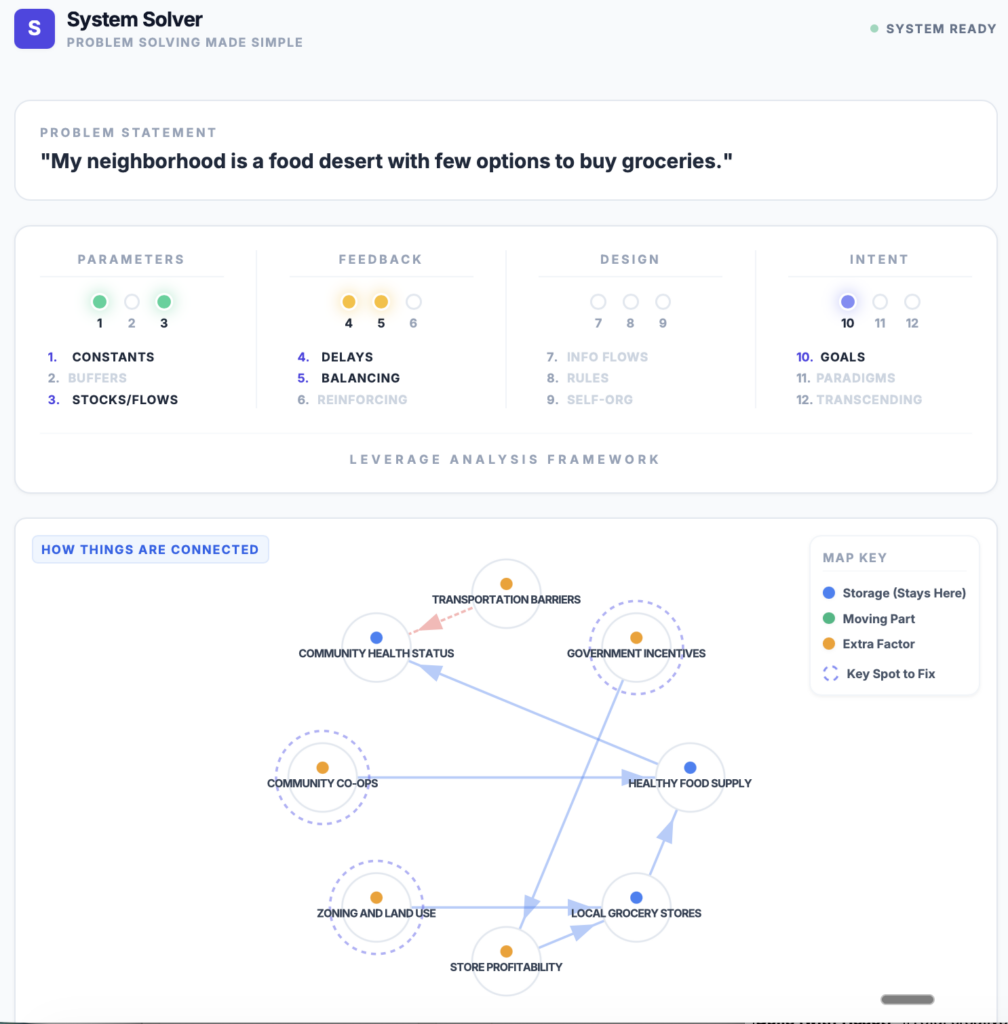
I have created a prototype application based on these concepts called “The System Solver”.
Problem Statement and Chart
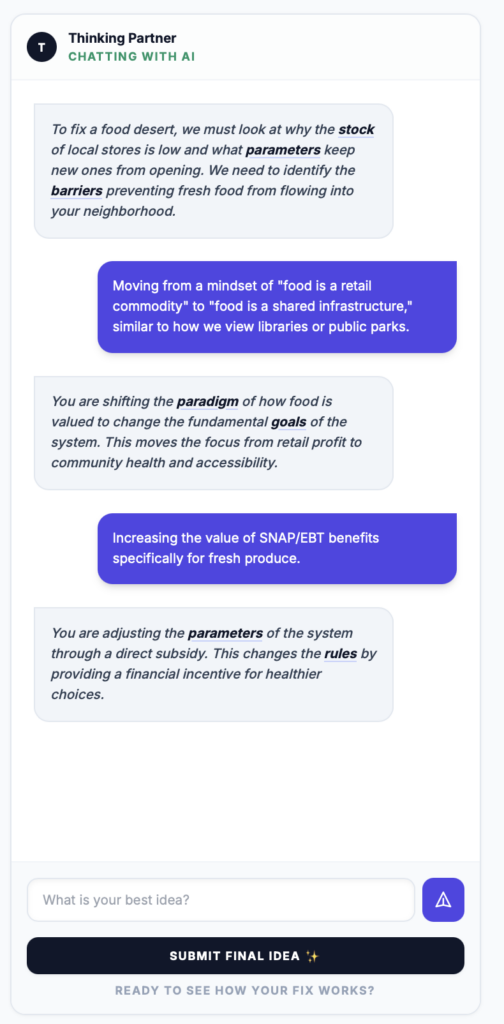
Thinking Partner
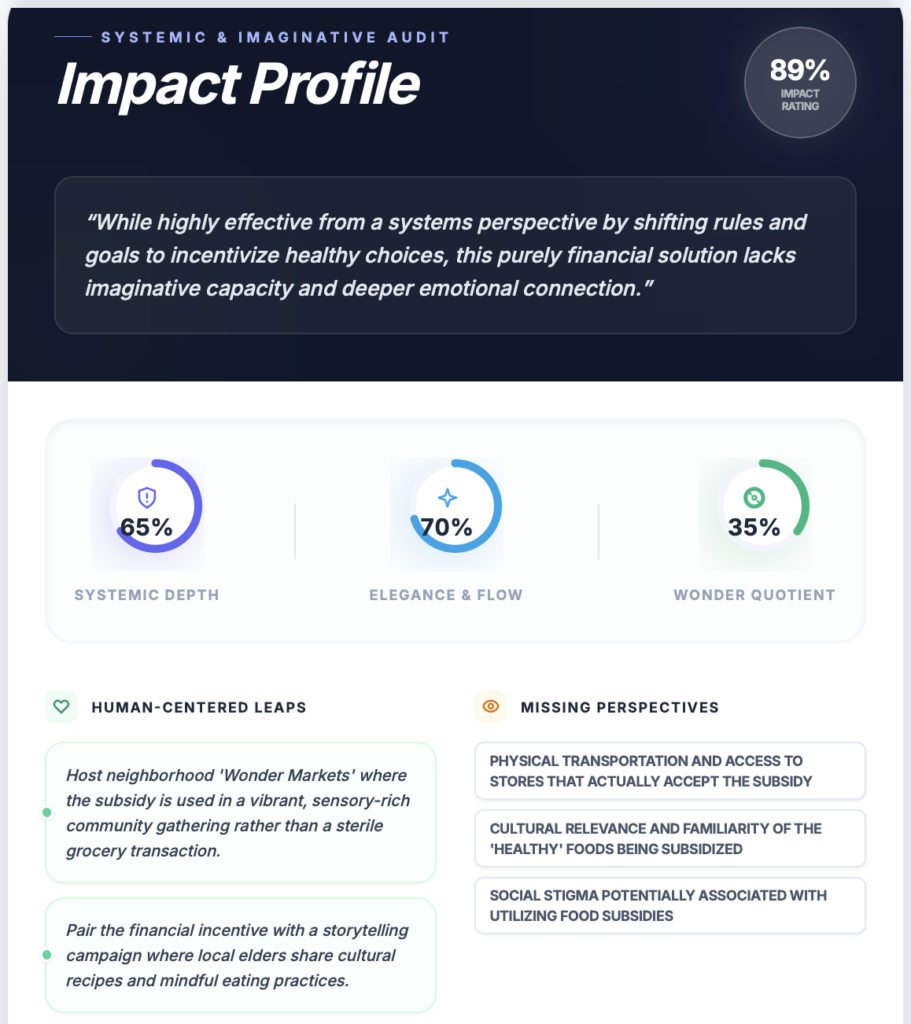
Impact Profile